
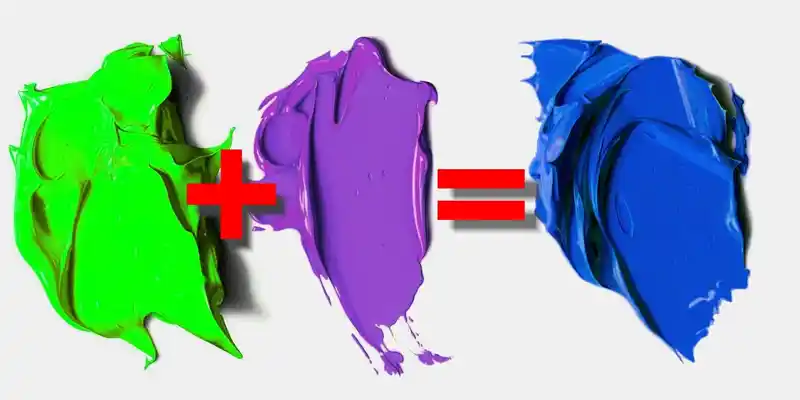
Ever wondered what happens when you mix green and purple? It’s a fascinating question that dives into the heart of color theory and the magic of blending hues. Whether you’re an artist, a designer, or just someone curious about colors, understanding the result of this mix can open up a world of creative possibilities.
When you combine green and purple, you get a unique color that’s not commonly found in nature or everyday life. This mix creates a rich, complex hue that can vary depending on the specific shades and proportions used. Let’s explore the captivating world of color mixing and discover what beautiful new shade emerges from blending green and purple.
Understanding Color Mixing Basics
Color mixing forms the foundation of creating new hues. Primary colors, red, blue, and yellow, can’t be made by mixing other colors. Secondary colors, green, orange, and purple, come from mixing primary colors. For example, blue combined with yellow makes green.
The color wheel helps visualize these relationships, showcasing how colors interact. Analogous colors sit next to each other, while complementary colors are opposite. Blending complementary colors, like red and green, often results in a brownish hue.
Additive and subtractive mixing represent two main methods. Additive mixing, used in digital screens, combines light colors; red, green, and blue together make white. Subtractive mixing, used in painting and printing, combines pigment colors; cyan, magenta, and yellow together make black.
Tertiary colors emerge from mixing primary and secondary colors. Examples include red-orange or blue-green. These mixtures create a vast spectrum of possible colors, offering infinite creative choices.
Understanding these basics aids in predicting color mixing outcomes, crucial for achieving desired results in art, design, and various creative applications.
Primary and Secondary Colors
Understanding primary and secondary colors forms the foundation of color theory, essential for artists and designers.
Primary Colors
Primary colors—red, blue, and yellow—are the sources of all other colors. By mixing these, it’s possible to create a wide spectrum. For instance, combining red and blue yields purple, blue and yellow make green, and red and yellow make orange. These primary colors cannot be formed by mixing other colors, making them unique in the color palette.
Secondary Colors
Secondary colors come from mixing two primary colors. Green, purple, and orange are secondary colors. For example, green results from mixing blue and yellow, purple forms from mixing red and blue, and orange comes from mixing red and yellow. Understanding these mixtures helps in achieving accurate color outcomes in creative projects.
The Science Behind Mixing Green And Purple
Mixing colors isn’t just an artistic endeavor; it has a scientific basis. By understanding both additive and subtractive color mixing, anyone can predict the resulting colors.
Additive vs. Subtractive Color Mixing
Additive color mixing deals with light. When combining colored lights, new colors form by adding wavelengths together. In this model, combining green and purple light (which combines red and blue wavelengths) can result in a white or gray light, as the mix covers a broad spectral range distributing wavelengths more evenly.
Subtractive color mixing deals with pigments. Pigments absorb certain wavelengths and reflect others. When mixing green (which absorbs red and reflects blue and yellow) and purple (which absorbs green and reflects red and blue) pigments, the resulting color is typically a shade of brown or gray. The two pigments absorb multiple wavelengths, resulting in less reflective light and creating a more muted color.
Color Wheel Insights
The color wheel simplifies understanding color relationships. Green and purple sit opposite each other, making them complementary colors. When combined in equal measure, complementary colors typically cancel each other out, often producing a neutral color like brown or gray.
Artists and designers use the color wheel to predict outcomes. By balancing the amounts of green and purple, anyone can control the resulting shade’s intensity and hue. This understanding is essential for achieving specific color outcomes in various creative projects.
Understanding these principles provides a solid foundation for accurate color prediction and creation in any medium.
Practical Applications Of Mixing Green And Purple
Mixing green and purple has several practical applications. These combinations aid creativity in art, design, and fashion.
In Art And Design
Artists use a blend of green and purple to achieve muted, neutral tones. When designing backgrounds, these mixed colors can serve as a subtle base, allowing other elements to stand out. Use green-purple mixtures to shade objects, providing depth in artwork. For instance, mixing them can create rich browns essential for realistic depictions in paintings.
Digital designers employ green and purple blending techniques to produce unique interface designs. These mixed hues enhance visual appeal without overwhelming the viewer. Games and apps often use these combinations to provide balanced color schemes.
In Fashion
Fashion designers incorporate green and purple mixtures to create sophisticated and unique looks. Mixing these hues, they develop garments that stand out yet remain classy. For example, accessories like scarves or handbags often feature these mixed tones for a modern look.
In fabric design, green-purple mixtures result in textiles with a rich, earthy appeal. These colors are perfect for autumn collections, adding warmth and refinement to outfits. Textiles in these tones blend well with various colors, offering versatility in styling.
Results Of Mixing Green And Purple
Combining green and purple reveals intriguing results in both artistic and practical applications. The outcome varies based on several factors, including pigment concentration and light conditions.
Expected Outcome
When mixing green and purple, the result typically leans towards a muted tone. This mixture often produces a brown or gray shade. The specific outcome depends on the proportion of green and purple used. For example, higher green amounts create darker, muddier tones, while more purple introduces a richer, somewhat warmer hue. This muted brown or gray can add depth and complexity to various art and design projects.
Variations And Influences
Several factors influence the final color produced by combining green and purple. Different shades of green and purple result in diverse mixtures. Light green mixed with lavender yields a soft, pastel tone, while dark green and deep purple create an earthy, robust color. Light conditions also play a role; under different lighting, the mixed color can appear slightly different. Artists and designers use these variations to achieve specific looks, experimenting with different shades and lighting to get just the right effect.
Conclusion
Mixing green and purple opens up a world of creative possibilities. The resulting muted shades like brown or gray can add depth and complexity to any art or design project. By experimenting with different proportions and shades, you can achieve a variety of effects, from soft pastels to rich earthy tones. Whether you’re an artist or designer, understanding how these colors interact allows you to create unique and captivating visuals. So next time you’re working on a project, don’t hesitate to mix green and purple to discover the intriguing hues they can produce.
